Mental Health Is a Human Right, Not Just a Hashtag 💜
We talk a lot about mental health awareness, but are we actually practicing compassion when it matters most
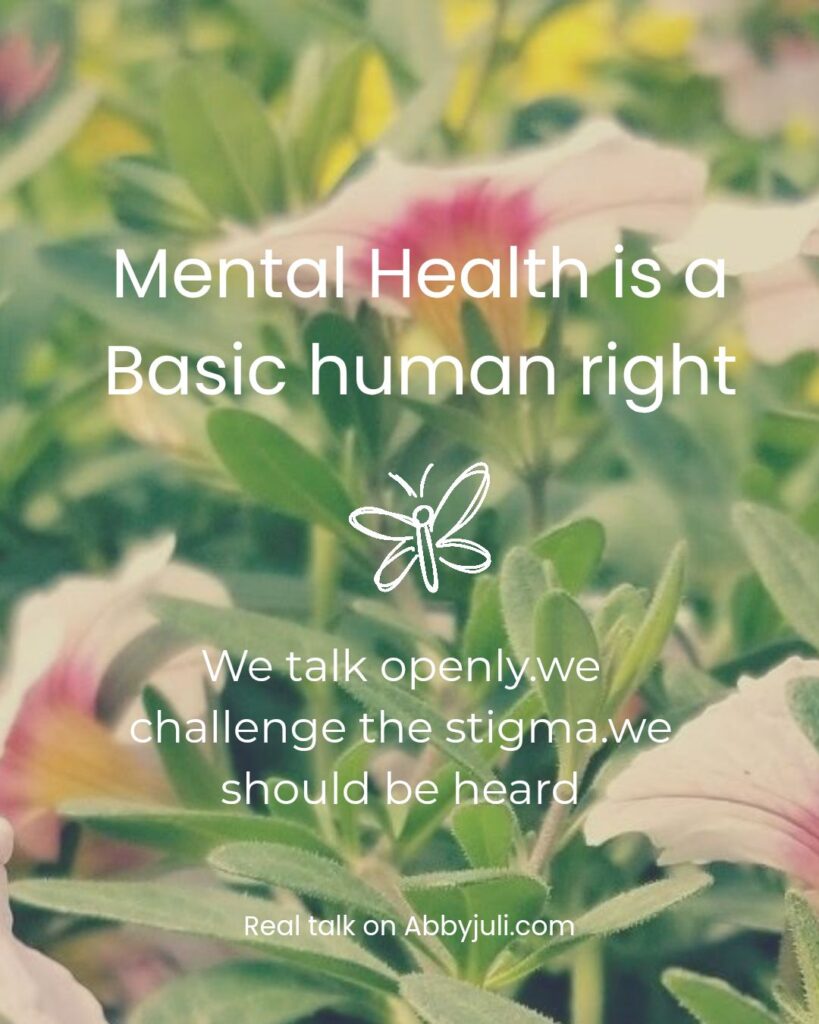
We live in a world that constantly tells us to speak up about mental health.
Ask for help.
Set boundaries.
Take care of yourself.
It’s okay not to be okay.
We see these messages everywhere. On social media, in workplaces, on inspirational posters, and throughout mental health awareness campaigns.
And don’t get me wrong. I think these messages are important.
As someone who lives with my own mental health struggles and advocates for mental wellness, I’m glad we’re finally having conversations that previous generations often kept behind closed doors.
But there’s something about modern mental health awareness that has been bothering me.
We encourage people to talk about mental health… until their struggles make someone else uncomfortable.
And that’s where things get complicated.
We Want People to Speak Up, but Are We Actually Listening?
We tell people that their feelings matter.
We remind them that they’re not alone.
We encourage them to reach out when life becomes overwhelming.
But what happens when someone actually does?
What happens when their anxiety isn’t something they can simply switch off?
When their depression makes everyday responsibilities feel impossible?
When they experience symptoms that aren’t easy for other people to understand?
When they’re exhausted, overwhelmed, withdrawn, or struggling to function the way society expects them to?
Suddenly, some of that compassion disappears.
People become impatient.
They tell you to stop overthinking.
They expect you to pull yourself together.
Or worse, they make you feel guilty for struggling in the first place.
And honestly?
That’s not mental health awareness. That’s conditional compassion.
We’re willing to support mental health when it’s easy to understand, but sometimes we struggle to accept the messy reality of what living with a mental illness actually looks like.
And mental health isn’t always pretty, inspirational, or easy to explain.
Sometimes it’s getting through the workday while quietly fighting an internal battle nobody else can see.
Sometimes it’s canceling plans because you’re emotionally exhausted.
Sometimes it’s sleeping more than usual, struggling with motivation, or having days when your brain simply refuses to cooperate.
Sometimes it’s doing everything you’re supposed to do and still not feeling okay.
That deserves understanding, too.
We Encourage Boundaries… Until Those Boundaries Inconvenience Someone
Here’s another thing I’ve noticed.
Everyone seems to love the idea of boundaries.
We’re constantly reminded to protect our peace, prioritize ourselves, and learn how to say no.
But the moment someone’s boundaries interfere with another person’s expectations?
Suddenly, they’re being difficult.
Selfish.
Unreliable.
Or not being a team player.
As someone who struggles with anxiety, people-pleasing, and feeling guilty about disappointing others, I’ve experienced how uncomfortable setting boundaries can be.
Especially at work.
Sometimes saying something as simple as “I can’t take on anything else right now” can feel like you’ve committed some terrible crime.
You start overthinking.
Are they upset with me?
Do they think I’m lazy?
Should I have just said yes?
And before you know it, you’re feeling guilty for recognizing your own limits.
But here’s what I’m slowly learning.
Having boundaries doesn’t mean you don’t care about other people. It means you’re learning to care about yourself, too.
We can’t keep telling people to protect their mental health while punishing them for doing exactly that.
Self-Care Shouldn’t Be Something We Have to Earn
We also live in a society that seems obsessed with productivity.
Work harder.
Do more.
Stay busy.
Keep going.
And somewhere in the middle of all that, we’re supposed to practice self-care.
But only after we’ve completed everything on our never-ending to-do lists.
I find this especially frustrating because exhaustion isn’t always something you can fix with a bubble bath, a cup of tea, or a good night’s sleep.
Sometimes you’re emotionally exhausted from simply trying to function.
From managing responsibilities.
From worrying about things that haven’t happened.
From trying to be there for everyone.
From dealing with mental health symptoms while still showing up for everyday life.
And then someone tells you to just relax.
Gee, thanks. Why didn’t I think of that?
If only our brains came with an off switch.
The reality is that self-care isn’t always glamorous.
Sometimes self-care is saying no.
Sometimes it’s asking for accommodations.
Sometimes it’s taking medication, going to therapy, or admitting you need additional support.
Sometimes it’s allowing yourself to rest without feeling like you’ve wasted the day.
And sometimes it’s simply surviving a difficult day.
You shouldn’t have to reach your breaking point before you’re allowed to rest.
You Don’t Owe Anyone Your Diagnosis to Deserve Respect
This one is especially important to me.
Not everyone is comfortable sharing their mental health story.
Some people are very open about their experiences.
Others prefer to keep their diagnoses, medications, therapy appointments, and personal struggles private.
Both are completely valid.
I’ve chosen to share parts of my own mental health journey through my writing, artwork, and creative wellness projects.
Not because I owe anyone an explanation, but because I want to help others feel understood.
I know what it feels like to struggle with things that aren’t always visible.
I know what it’s like to have good days and difficult days.
And I know how lonely mental health struggles can feel when people don’t understand what you’re experiencing.
But being open about my experiences doesn’t mean everyone else needs to do the same.
You shouldn’t have to explain your entire medical history just to have someone respect your boundaries.
You shouldn’t have to prove you’re struggling enough to deserve kindness.
And you certainly shouldn’t have to share deeply personal information just to convince someone that your feelings are real.
Your mental health matters whether you choose to talk about it publicly or keep it private.
Mental Health Awareness Needs to Go Beyond Inspirational Quotes
Now, don’t get me wrong.
I love a good inspirational quote.
I’m an artist. I literally create encouraging artwork and mental wellness reminders.
Sometimes a simple message can make someone’s difficult day feel a little less lonely.
But I also know that an inspirational quote isn’t going to solve everything.
Awareness is a starting point.
It’s not the finish line.
Real mental health advocacy means creating environments where people feel safe asking for help.
It means recognizing that mental health symptoms can look different from person to person.
It means respecting boundaries even when we don’t personally understand them.
It means taking people seriously before they reach a crisis.
And it means accepting that mental health recovery and management aren’t always straightforward.
Some days we make progress.
Other days we struggle.
And sometimes we’re simply doing our best-ish.
Sound familiar?
Life isn’t a perfectly organized wellness journal with color-coded emotions and a motivational quote waiting at the bottom of every page.
Although, as a creative person, I have to admit that sounds kind of nice.
Real life is messy.
Mental health is messy.
And being human is definitely messy.
We Need More Compassion, Not More Expectations
One thing I’ve learned through my own experiences is that you never truly know what someone else is carrying.
The quiet coworker might be struggling with anxiety.
The friend who hasn’t answered your messages might be emotionally overwhelmed.
The person who seems perfectly happy could be dealing with symptoms nobody else notices.
And the person who always shows up for everyone else might be the one who desperately needs someone to show up for them.
We shouldn’t have to know someone’s diagnosis to treat them with kindness.
We shouldn’t assume that someone is fine simply because they’re functioning.
And we shouldn’t measure someone’s worth by how productive, cheerful, or emotionally available they happen to be.
Compassion doesn’t mean we have to understand every experience.
Sometimes it simply means listening.
Being patient.
Respecting someone’s limits.
And remembering that the person standing in front of us is human, too.
Mental Health Is Health. Period.
At the end of the day, mental health isn’t a trend.
It’s not a hashtag.
It’s not something we should only care about during an awareness month.
Mental health is part of our overall health, and access to appropriate mental health care is an essential part of the human right to health.
But beyond access to treatment, I believe we need to create a world where people can acknowledge their struggles without automatically facing shame, dismissal, or judgment.
A world where asking for help isn’t treated as weakness.
Where setting boundaries doesn’t make you selfish.
Where rest isn’t something you have to earn.
And where people don’t need to pretend they’re okay just to make everyone around them more comfortable.
I’m going to keep writing about the messy, imperfect reality of living with mental health struggles.
The good days.
The bad days.
The strange 3 AM thoughts.
The moments when I feel like I’ve figured something out, only to realize that I’m still learning.
Because that’s what being human is about.
We’re all figuring things out in our own ways.
And maybe, just maybe, if we started approaching mental health with a little more patience and compassion, fewer people would feel like they have to struggle in silence.
Mental health is health. Mental health is a human right. And awareness without compassion simply isn’t enough. 💜
A Little 3 AM Thought 💭
We tell people it’s okay not to be okay.
But are we actually making it safe for them to admit when they’re struggling?
Because supporting mental health shouldn’t mean supporting people only when their struggles are convenient, understandable, or easy to handle.
People deserve compassion on their difficult days, too.
What’s one thing you wish more people understood about mental health? Have you ever felt like people encouraged you to speak up but weren’t prepared to actually listen?
I’d love to hear your thoughts in the comments.
Until next time, keep being human, keep learning, and keep doing your best-ish.
— Abby
More personal reflections, creative wellness, and mental health resources at AbbyJuli.com.
Discover more from 3AM and Still Figuring it Out
Subscribe to get the latest posts sent to your email.